As the planet is getting hotter, sustainability business is hotter than ever. But what does it do to engaged sustainability professionals to be treated as green money-making machines? Is it enough that the role in itself has a sustainability focus, or are the work structures also influential for meaningful work? To explore this further I interviewed Louise and David, employees in a Swedish consultancy firm run in a non-consultancy-traditional way.
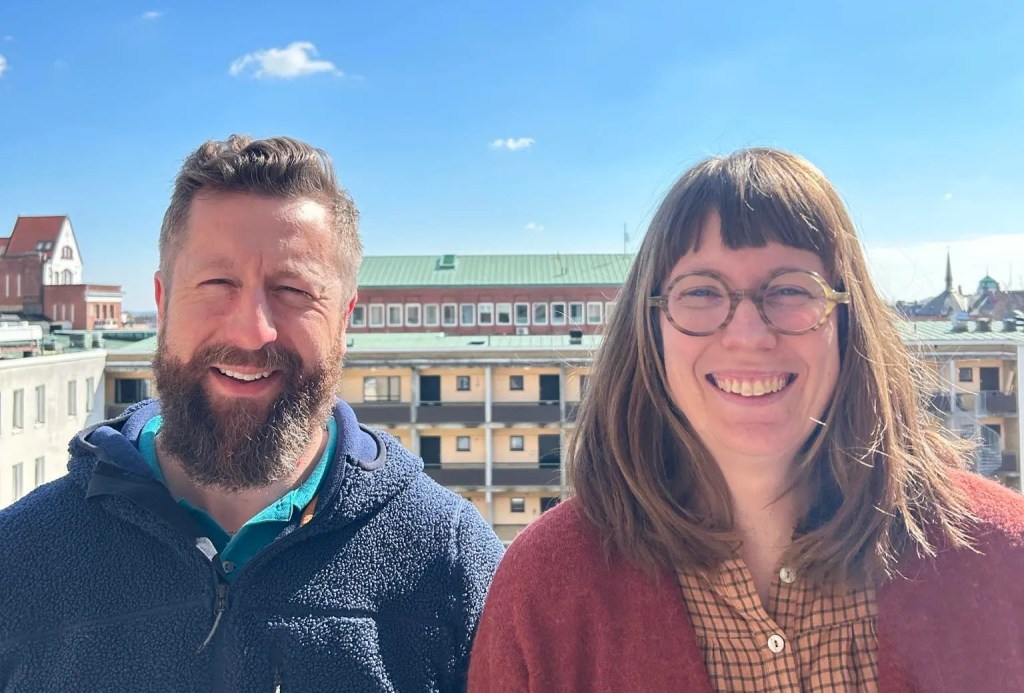
Once upon a time, a couple of consultants got fed up with the way their workplace was managed, and decided to start their own firm where they could do things differently. That is where Louise and David currently work. Louise, employed as a project manager for environmental projects. David, employed as an environmental consultant and project manager. Louise was lured into the firm by a friend. David was tempted by an interesting project. Both decided to stay. This is the story about why.
What exactly is it that is different?
David has experience from one of the large well-known consultancy firms. According to him, the biggest difference between his current workplace and the former is the lack of obsession with billable hours.
David: In other consultancy firms, it is normal to sit in a group every week or month and being told what percentage of billable hours you and your coworkers have obtained. You are being ranked from the highest to the lowest performer. The ultimate goal thus becomes to find that one extra hour to bill.
Billable hours are also the backbone of David and Louise’s current workplace. The difference, however, is focus.
Louise: You don’t get to know the billable hours of your colleagues. The performance of the different departments is not compared. Your profitability is only brought up in the yearly salary review.
The valuable employee
The consultancy firm where Louise and David work has existed for five years. The vision of the founders is a firm with focus on close relations.
Louise: There is a low threshold for telling management how you are doing, also about things that are difficult outside work. If you do not have enough projects you can go to the management to get support. You get the feeling that billing hours ultimately is management responsibility and not your personal failure.
To convince me that their employer is taking relations seriously, David and Louise list examples of measures the firm takes to strengthen relations:
- The yearly several-day kickoff is mainly about getting to know each other (better). There is limited focus on company goals and strategies.
- The employees should not feel alone in their work. In all projects, there are at least two employees.
- Environmental aspirations are respected. Employees can take the train instead of plane no matter the price and hours. Flying is climate compensated x2.
- Employee worries are listened to. As the firm last year went out on a big hiring campaign, it was stopped as the employees got worried that the firm would grow too fast.
- Employees get to decide on work environment. The main office is placed centrally and has rooms for 6-8 persons. Open-planned offices in ‘consultancy-swamps’ (David’s words) would be cheaper but the employees were not keen when the suggestion was brought up.
- The workplace should be somewhere you want to go to. They eat breakfast together on Tuesdays, have a big couch, wear indoor shoes, and dogs are welcome.
The value of the employee is also reflected in the autonomy the employees have in choosing what to work with. When I ask David and Louise how the work structures contribute to the possibility to do meaningful work, the autonomy and trust is what they emphasize.
David: In other workplaces the managers will always ask you about the profitability of a project before they grant it. Here they ask if it feels fun and meaningful for me, and that is what is decisive
Can economics thrive when profit is not in the front seat?
It is really expensive to lose employees. The employee turnover rate in consultancy firms is normally 1,5-2 years. According to David, all the large consultancy firms are pretty much the same, “they just have different logos”. Maybe it is not strange, then, that consultants move often, in order to get salary increases. According to Louise and David, those who have left their workplace have done so to go into other roles and industries. Not to other consultancy firms. As the economy of Louise’s and David’s workplace is booming, it seems like the strategy of making the employees feel valued, trusted, and part of a team could be quite profitable.
Any downsides?
Another reason why Louise’s and David’s workplace is going well economically is that they almost do not have any administration personnel. Which worked fine while the firm was small. But now that it is growing fast both employees and management are starting to get overwhelmed. The somewhat ‘wild west’ ambience might be exiting for those who are used to the game, but especially for junior employees it can be frustrating with the lack of support. The firm has therefore decided to abandon the extremely flat hierarchy and employ middle managers.
Louise: Many fear that this could jeopardize the unique culture we have built up. At the same time, everyone realize that we cannot continue as we have. I think we will manage.
David mentions that a lack of structure and reporting also could have negative implications for the possibility to do meaningful work, in the sense that the time to sit down and evaluate the sustainability impact of a potential project is down prioritized. He hopes the new structure with the middle managers can be an answer.
David’s mentioning of sustainability impact evaluation makes me think of Jenny, the consultant from the 20 voices study, who does not think her work has an impact on a systems level. Could dedicated time for evaluations contribute to enhancing sustainability consultants understanding of their work’s global sustainability role?
Reflections
Are work structures influential for meaningful sustainability work? Therese, from the 20 voices study, does not think it is decisive: “Of course your work environment can create advantages or disadvantages. But you need to take responsibility for your own conditions. There are limits to how much one can push when one only experiences obstacles, but it is sometimes a bit too easy to think that the system does not work”. I do not agree. I do not think individual employees have much power to change their work conditions. And I think it is challenging to do truly sustainable sustainability work in a system that is not supportive.
Louise and David strongly imply that the feeling of being meaningful to their employer is important. They get to prioritize sustainability over profit, to cooperate freely, they have the possibility to truly get to know their coworkers as they do not have the tendency to run off to other consultancy firms, and brain capacity can be used on projects and ideas instead of profitability anxiety. I guess being perceived as human beings and not interchangeable cogs in a machine is beneficial for all types of professions. For sustainability professions, however, it is that extra aspect: When the meaning of the job itself is to enhance sustainability it is alienating to work in a system built on a different set of values.
I ask David and Louise whether all consultancy firms could adopt the structure of their workplace. They answer that it would require major changes. Such as sacking 50% of the managers because of less need for reporting. But that it surely would work.

 Meaningful sustainability jobs
Leave a comment