14 years ago, I graduated from the Industrial Ecology master’s program at NTNU in Norway. Back in 2010, global warming felt distant. Like humanity was going to start noticing a slight change in temperatures around 2100. Today, catastrophic consequences are already frequent in media. How is it like to be a student at that same master’s program in 2024? Samantha and Paula, two final year Industrial Ecology master students, agreed to enlighten me.
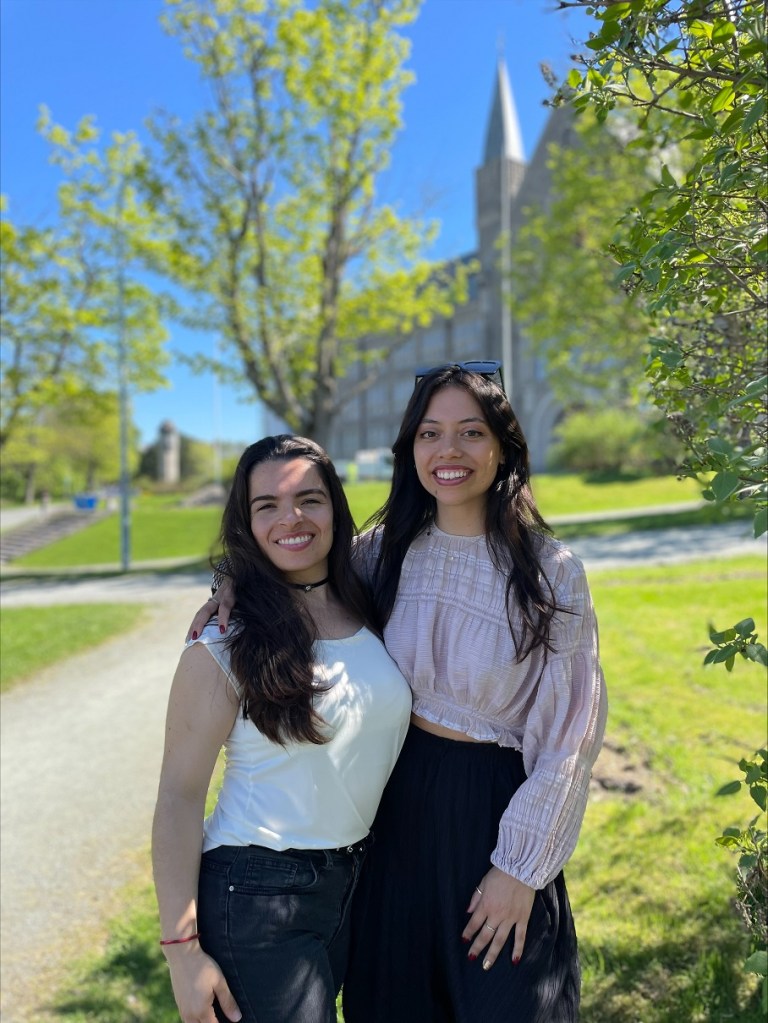
Both Samantha and Paula have travelled far to attend the master’s program in Norway. From New Zealand and Colombia. They are close to 30 and have various educational and professional experiences. Industrial ecology was a very conscious choice for both.
“I have bachelors in mechanical engineering and law ,” Samantha tells me. “The law industry was not quite the right fit for me. I liked engineering more but I never felt like I had picked the right branch. Then I came in contact with sustainability through a project at my last consulting job in New Zealand. Industrial ecology was an opportunity to move in that direction.” Paula also has an engineering background. Her Industrial Ecology plan took several years to realize. “First I saved up money. Then the pandemic came. Now I am finally here.”
The more responsible generation
My Industrial Ecology class, the one of 2010, was not an overwhelmingly environmentally conscious class. We had Guillaume, who fixed his broken shirts with patches but generally, we were a carefree gang travelling with plane whenever we had the time and money for it. Has that changed?
“The class is very engaged in making informed choices,” Samantha tells me. “In general, the students try not to fly. Particularly within Europe. Many are vegetarian and vegan. And some are very engaged in activist groups like Scientist Rebellion.”
Paula and Samantha tell me about a strong sense of urgency. About the feeling of hopelessness that came creeping in the beginning of the master’s program when they learned just how bad the state of the planet was. But that, at the same time, they are very committed to act. “We all know that we are very far from meeting the 2030 targets but we are all on the same page,” Paula tells me. “We can still contribute to making things less bad.”
“Making things less bad”… It is an echo from the interviews with the 10–20-year older sustainability professionals from the 20 voices study. On the one hand, I find it good that the next generation sustainability professionals are pragmatic. On the other hand, it makes me sad that the students do not get to start their career with dreams of great achievements.
System perspective with decreasing nuances
Something very central to the Industrial Ecology program is the systems thinking. The students learn how stakeholders are interconnected and that both problem causes and solutions must be handled holistically. There are, however, perspectives that are best taught from the students themselves, such as the challenges of developing countries.
“In Colombia, it is very challenging to deal with environmental problems because of social issues such as corruption and drug trafficking,” Paula tells me. “I know that my country needs to go through a lot to reach the goals. It is like a cancer.” Samantha is half Filipino and can relate: “It is super important for Industrial Ecology to have an international mix beyond Europe, otherwise the collective dialogue misses the nuances. Holding every country to the same account without understanding the underlying causes for inaction is not constructive.”
The international mix is however threatened. From being a country with free university education for all, Norway has now made tuition really expensive for non-EU students. Another nuance that has been lost over the years is that of educational background. Back in my days, certain social sciences like politics and economics bachelors where eligible for the master’s program. I guess it is a relief for the life cycle assessment class teachers to have gotten rid of hopelessly untechnical students (like myself), but I wonder what has been lost in the process.
Meaningful careers
I am curious to find out how the next generation sustainability professionals perceive what is meaningful and not meaningful work. But then there is of course also the challenge of getting a job in the first place. Paula and Samantha tell me that not everyone has gotten a job yet. One challenge is competition from other more traditional master programs which are ‘catching up’ in the sense that they include some sustainability courses.
Samantha will not finish the studies until Christmas and is not yet sure what she is looking for. “I am quite open. But I have some criteria. There are certain sectors I don’t feel comfortable working for, as a matter of principle. On the other hand, some of our classmates think the first job has to be the perfect move. But at the beginning of your career, I understand that you may not have the influence to be the biggest changemaker. As long as I work in the right field, I hope I will do and build something meaningful.”
Paula has gotten a job in an IT-firm where she will develop tools for helping stakeholders identifying and reducing environmental impact. To her, stakeholder involvement is central in meaningful work. “Even though individually they may not be the biggest emitters, they are a big part of the problem if you sum them up. I want to help them being part of the solution.”
The 2024 class sees pros and cons in all career choices. Industry and consultancy jobs are sometimes seen as too basic. The students try to avoid the many companies that need help to ‘tick regulatory boxes’, as they feel that their complex sustainability education is better put to use elsewhere. Research is seen as an important forefront actor, but also as too disconnected from a real-life context. Which is nothing new, but the urgency aspect is making the students perceive it as more important to close the gap between research and industry.
I ask Paula and Samantha whether it would not be most impactful to work in the countries that lag behind and have the most challenges. Samantha tells me that some of the reason why she left New Zealand was just that; that they lag so much behind. “EU directives push a lot. From a practical perspective I can gain more experience earlier in my career if I work in Europe. It takes time to become influential.”
A few days before the interview, there was a large Industrial Ecology alumni event at NTNU. The event inspired Paula and Samantha a lot. They got the perception that the way of thinking taught by the master’s program is very relevant and that the graduates so far have had impact.
I myself get inspired by talking to Paula and Samantha. Enlightened, critically thinking, and morally driven next generation sustainability professionals. I wonder, once into their career, how those traits will influence their perspective on what is meaningful or not.

 Meaningful sustainability jobs
Leave a comment