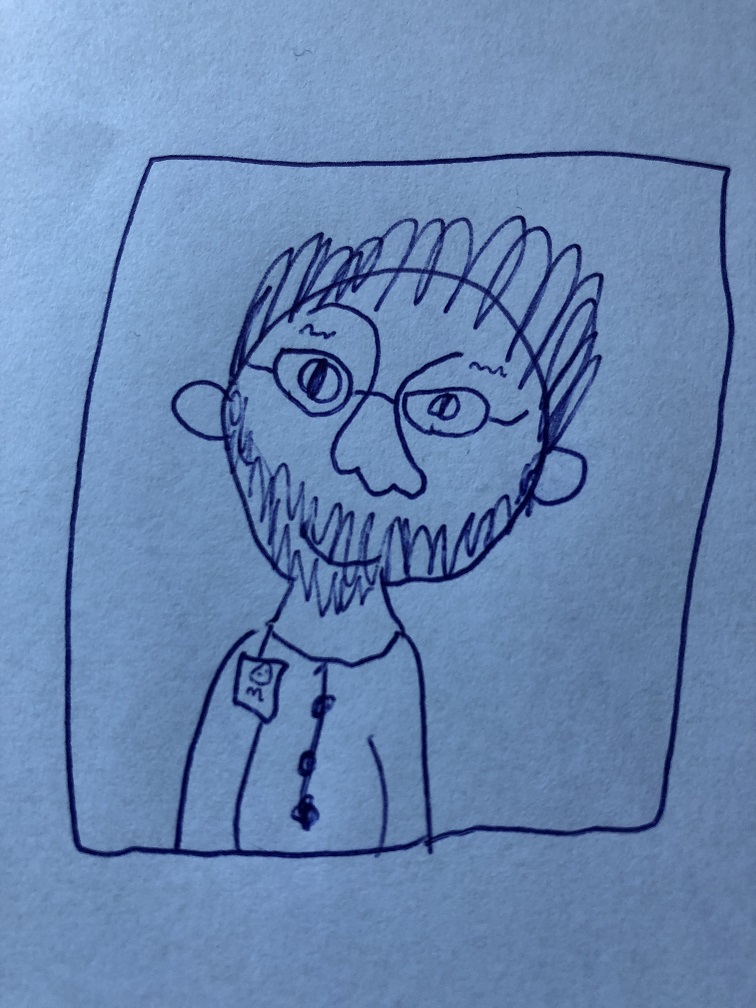
Danny works with research at a university. Engineer by education. He is approaching forty and has worked as a sustainability professional for fifteen years.
“It can be hard to identify the individual contribution. Was it thanks to me?”
Danny’s environmental engagement started at an early age. The school system introduced him to arenas where the importance of natural preservation was highlighted. Museums, parks, the scouts. It became natural for him to choose environmental directions and courses in school and university. But the full-hearted all-in dedication first came when he did his master thesis. He sees his job as a perfect match between the way he likes to work – researching – and his passion – the environment. He also likes the versatility. “In research you get to work with different products and systems. In industry you only get to focus on one thing.”
Does Danny believe that his dedication has a sustainability contribution? “As a researcher I contribute with arguments that can promote solutions and technologies,” he says. Danny finds it important that there are several actors “standing there and yelling,” and that research plays an important part as it is well grounded knowledge. He does not have evidence that his arguments actually lead to change, but he has a feeling that they do and will. “It can be hard to identify the individual contribution. Was it thanks to me?”
Teaching is also a part of Danny’s job that he believes contributes to sustainability. “Experienced academics say that teaching is the arena with the largest impact.” When I ask him in which way teaching contributes, he answers that it inspires the students to reflect a lot about sustainability. Not all of the students end up as sustainability professionals, but it is important that the reflections are brought into other professions as well.
Has the sustainability impact of his job increased or decreased during the fifteen years he has worked as a sustainability professional? Danny definitely thinks it has increased. The reason, he says, is that he is now working more in projects considering technologies that are important for a sustainable transition. Earlier, his work sometimes felt “more theoretical and not so relevant.” What is the reason that his projects have become more relevant? “Now I get to choose more what I want to work with. With the experience I have gained over the years I now also have a better ability to predict what will be relevant in the future. And it also has to do a bit with luck: that we are lucky to get financing and that we are lucky to get good results.” What has not changed during the years, Danny adds, is his confidence in the sustainability legitimacy of his workplace. Maybe that creates some kind of constant that Danny can rely on when he sometimes works in projects that feel less relevant.
When I ask Danny which role or workplace he believes has the greatest sustainability impact he takes a long pause to think. “The absolute sustainability elite has the most impact,” he answers. With “sustainability elite” he means people like Al Gore, Greta Thunberg, Johan Rockström, Ellen McArthur “and other gurus”. Danny does not want to specify a type of sector such as “NGO”. He thinks it has a lot more to do with how a person is able to communicate messages to the public than the specific role or workplace he or she has. He adds that sustainability researchers like himself also have impact, but less so than the “gurus”.
And the opposite? The role a sustainability professional can have with the least impact? “The type of consultants developing EPDs on an assembly line,” Danny says. “Especially if it is for existing products in a traditional industry with no intention to change anything.” Key for Danny is to contribute to change. “The EPD assembly line work might have its value in some way but I experience it as a way to create legitimacy for status quo.”
Danny has confidence in that creating change will save humankind from a climate collapse. That technological inventions will be developed and implemented fast enough. There will be uninhabitable areas on the planet but the population decline that is going to happen anyway will help.
Danny strikes me as a quite positive and content person. He is happy in his job and at his workplace. He does environmental choices in his everyday life but does not despair when a conference is located in a place where air travel is the only option. He is drawn to colleagues and other researchers that are passionate about their job and believes it has a sustainability contribution. “Maybe I am so satisfied because I have a lack of imagination,” Danny laughs.

 Meaningful sustainability jobs