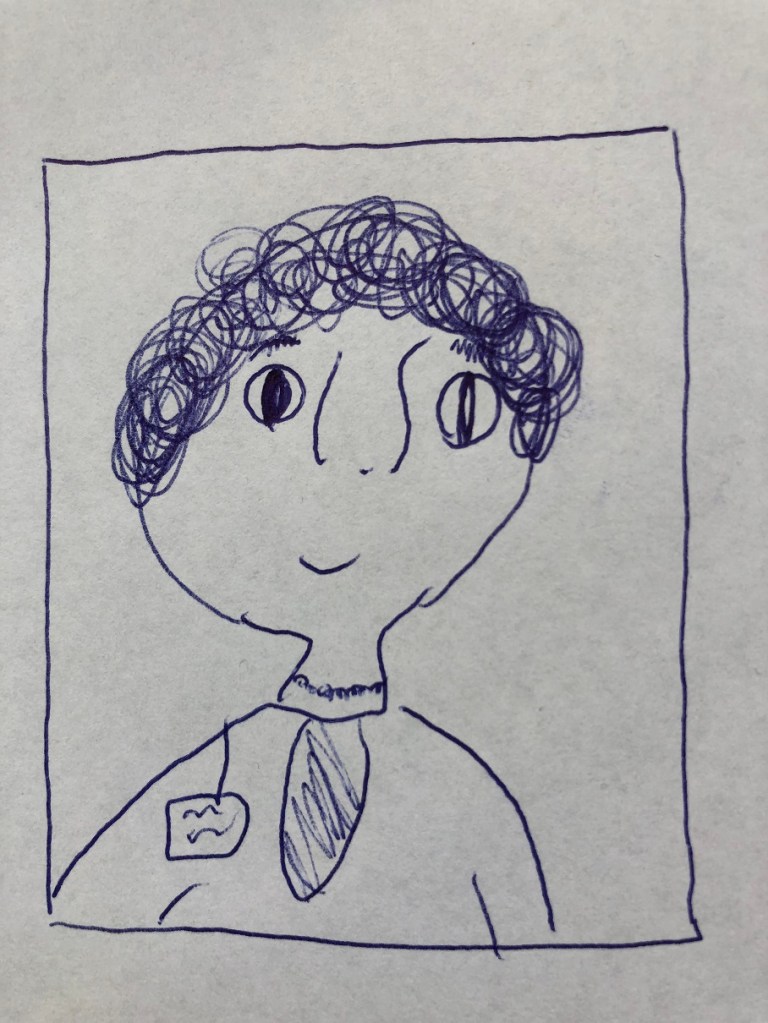
Oscar works at a research institute. Engineer by education. Oscar is in his early forties and has worked for almost twenty years as a sustainability professional.
“Injustice triggers me”
“I made that choice very young”, Oscar replies when I ask him why he ended up working with sustainability. He was active in an environmental organization and understood early that the topic would be a “big deal” in the future. That it would be important to focus on and that there would be interesting work opportunities. From the engagement in the environmental organization, he also discovered that working with sustainability felt really good. “Injustice triggers me.”
Oscar is confident that his current work contributes to sustainability. He works mostly with new technologies, in research projects. His role is to measure the environmental impact of different solutions, and to show ways to reduce it. “The companies always take it as a challenge to reduce their environmental impact after receiving my results.”
The confidence in his sustainability contribution has, however, not always been as present. Oscar’s previous workplace was in industry. “I was making more money, but I was bored out of my mind and very frustrated,” Oscar recalls. The company where he worked was not proactive. “There were no internal environmental requirements. The requirements had to come from the outside, and the company saw them as a pain in the ass.” Oscar also found it frustrating that other companies in the same industry seemed to be more proactive. He saw that they had employed more people with sustainability roles, and that they had developed strategies and partnerships. The prospect of not working alone as a sustainability professional was one of the motivations for taking on his current job, where he has a team of colleagues with the same competence.
As Oscar has worked for so many years as a sustainability professional, I am curious about whether he believes that his sustainability impact has increased over the years or the opposite. Oscar answers that it is more an external influence deciding over the impact than his actual actions at work. “When I started to work after the studies people did not care so much, environment was just one of many parameters. Nowadays it is a marketing issue. The companies want to show that they do a good job, so they commission consultants more often.” According to Oscar, more attention leads to more action, which leads to impact. He believes that industry has the biggest responsibility as it controls the operations. “I cannot make the decisions, I just inform. Industry has to use the results that I provide them with.”
Oscar is a pragmatic person. He sees his experiences at different workplaces as a way of learning. About sustainability, but also about himself. If he could choose, his next move would be to work at a government agency. “Industry will always choose economy over environment. The only ones who can force industry are policy makers. If you work at a government agency, you have the possibility to make real change. At least that is what I believe. I want to see if that assertion is true or not.”
A job that Oscar does not want is to collect data for sustainability reports, which he finds “boring and completely useless.” Oscar believes that the reports are easily manipulated and that no one really cares about them. Another task that Oscar earlier believed was useless was the conduction of environmental product declarations. Then he completely changed his mind. “When I started to work with environmental product declarations I saw that clients came back and wanted updated assessments when they had improved. Again and again. Environmental product declarations are a very effective way to drive change, as the companies can compare with both themselves and other companies. That creates competition.”
There is one industry that Oscar is always avoiding. “I never wanted projects with the automotive sector. It is one of the main responsible for the crisis we are in.” Oscar believes that it does not matter what they do, even transferring to electric vehicles. “The cars are so huge. Even if the cars become more efficient, the automotive industry will use those improvements to consume more resources.”
I ask Oscar if he thinks there is hope of getting out of the crisis. Oscar takes a long pause. “No,” he replies. “But it does not matter to me. For me it is about justice and doing what I believe is right.” Oscar makes cautious choices in his everyday life when it comes to consumption, food and transport. Not because he thinks it will save the world but because he thinks it is the right thing to do. As he does not have children he is not stressed about the future. “But for me it is insane that there are so many people who have children and still do not care.”

 Meaningful sustainability jobs